
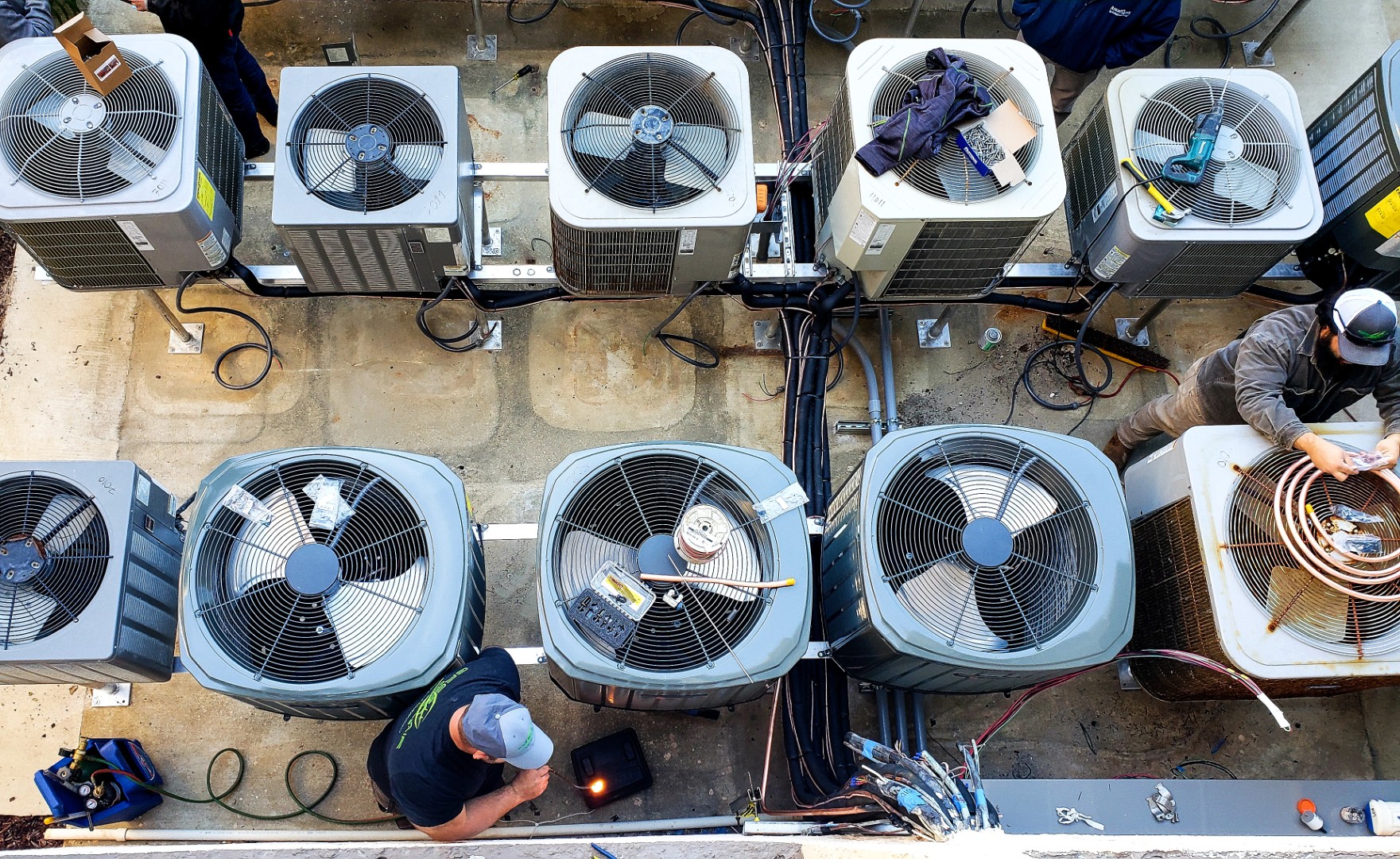
Heating and cooling systems are one of the biggest energy expenses for many businesses. A reliable heating and cooling system must heat and cool large spaces while maintaining comfort for employees and customers.
Many companies now invest in energy efficient HVAC systems for commercial buildings to control energy costs. New technology allows modern commercial HVAC systems to operate more efficiently than older equipment.
These systems improve airflow, optimize heat exchange, and maintain consistent temperatures. Businesses that install the best energy efficient HVAC systems can lower energy use while improving building comfort.
Why Energy Efficient HVAC Systems Matter for Businesses
Commercial HVAC equipment often runs for long hours. Because of this, efficiency directly affects operating costs.
Upgrading to efficient HVAC systems helps businesses lower energy use and improve building performance.
Lower Operating Costs
Older cooling systems and outdated AC units often use more electricity than necessary. Replacing aging equipment with modern systems reduces power consumption and improves efficiency.
Although newer systems may have higher upfront costs, they often deliver long-term cost savings. Many businesses see lower energy bills after upgrading their HVAC equipment.
Efficient systems also improve cost effectiveness by reducing repair and maintenance needs.
Improved Comfort in Commercial Spaces
Comfort matters in every workplace. Modern air conditioning systems distribute air evenly throughout the building.
Many systems also introduce fresh outdoor air, which improves ventilation and indoor air quality. These systems keep spaces efficiently heated in winter and comfortably cooled during warmer months.
Better airflow and stable temperatures improve productivity and overall home comfort for building occupants.
Understanding HVAC Efficiency Ratings
Businesses should review system efficiency ratings before purchasing new HVAC equipment. These ratings help measure how well a system performs.
Seasonal Energy Efficiency Ratio (SEER)
The Seasonal Energy Efficiency Ratio measures how efficiently an HVAC system cools a building.
Systems with higher SEER ratings use less electricity while providing the same cooling performance. The Department of Energy sets minimum efficiency standards for many HVAC systems in the United States.
ENERGY STAR Certification
Many modern systems carry Energy Star certification. Equipment that is Energy Star certified meets strict efficiency requirements.
Choosing systems with energy star certification helps businesses reduce energy use and support sustainability goals.
Best Energy Efficient HVAC Systems for Commercial Buildings
Businesses have several options when selecting the most energy efficient HVAC systems. Each system works best in different building types.
Air Source Heat Pumps
Air source heat pumps provide both heating and cooling in one system. They transfer heat between indoor spaces and the outdoor environment.
Because they rely on heat transfer rather than combustion, these systems often operate with strong efficiency.
Geothermal Heat Pumps
Geothermal heat pumps use underground temperatures to regulate building climate.
Many businesses install geothermal HVAC systems because they provide consistent efficiency and long system life. Although installation can involve higher installation costs, the long-term cost savings can be significant.
Split Systems and Rooftop Units
Many commercial buildings use split systems that include an indoor unit and outdoor condenser.
The indoor component usually includes an air handler, which circulates conditioned air throughout the building. Modern equipment uses improved compressors and heat exchange technology to improve efficiency.
Key Considerations for Commercial HVAC Installation
Choosing the right system is only part of the process. Proper commercial HVAC installation ensures the equipment performs as expected.
Building Size and Layout
Each building has unique heating and cooling requirements. System designers must match the equipment to the building’s size and layout.
A properly designed heating and cooling system keeps every area of the facility efficiently heated and cooled.
Infrastructure and System Capacity
Technicians must evaluate electrical capacity and airflow requirements before installation. These steps ensure the HVAC equipment integrates correctly with the building.
Professional Installation
Experienced technicians handle commercial HVAC installation to ensure equipment works safely and efficiently.
Proper installation also helps extend equipment life and improve long-term performance.
Reliable Commercial HVAC Services
Businesses depend on experienced professionals to maintain efficient HVAC equipment.
Dowling Corporation provides professional commercial HVAC services including system design, installation, repair, and maintenance.
Our team works with facility managers, contractors, and business owners to install reliable commercial HVAC systems that meet operational needs.
With proper service and maintenance, these systems deliver dependable heating and cooling performance for years.
FAQ: Energy Efficient Commercial HVAC Systems
What are the most energy efficient HVAC systems for commercial buildings?
Some of the most energy efficient HVAC systems include air source heat pumps, geothermal HVAC systems, and high-efficiency split systems.
What does SEER mean in HVAC systems?
SEER stands for Seasonal Energy Efficiency Ratio, which measures the cooling efficiency of HVAC equipment.
Are geothermal HVAC systems a good investment?
Yes. Geothermal HVAC systems often have higher upfront costs, but they provide excellent long-term cost savings.
Why is professional commercial HVAC installation important?
Proper commercial HVAC installation ensures equipment is installed safely and operates efficiently.
How long do commercial HVAC systems last?
Most commercial HVAC systems last 15–25 years when businesses maintain them properly.