
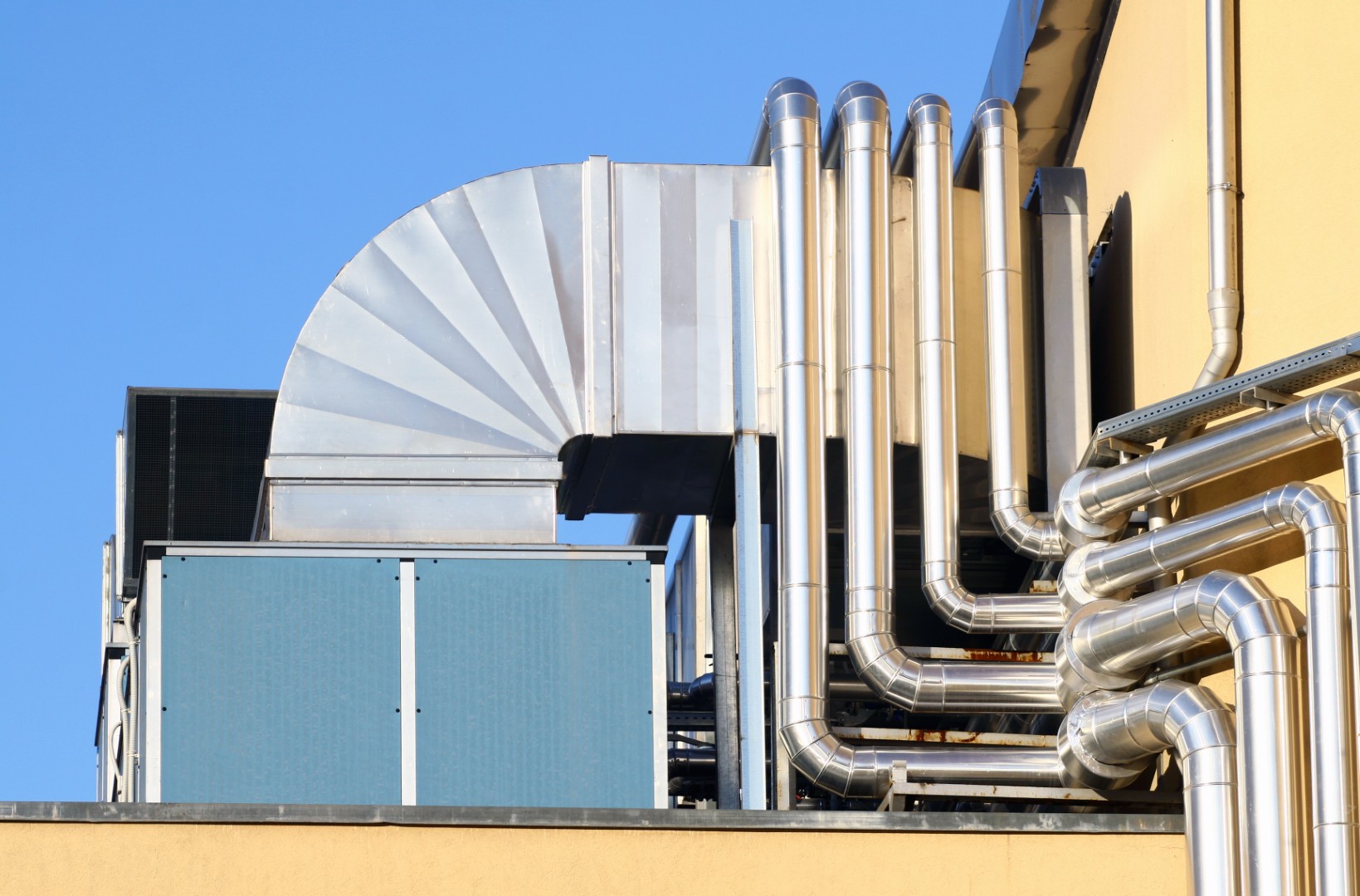
Rooftop units are the workhorses of commercial HVAC. Walk across the roof of nearly any office building, retail plaza, warehouse, or medical office in New England and you’re walking past the equipment that heats and cools the space below — quietly for years, and then suddenly not.
This guide explains how commercial rooftop units actually work, how long you should expect one to last, what tells you the end is near, and how to make the repair-versus-replace decision at the moment it becomes unavoidable. It’s the guide we wish every facility manager had before their aging RTU forced the decision for them.
KEY TAKEAWAYS
- A well-maintained commercial RTU lasts 15 to 20 years. Poorly maintained units often fail at 10 to 12.
- New units are so expensive now there is almost no repair more than 30% of a new unit cost. The old industry rule of thumb to replace RTU “when repair is more than 50% of new unit cost and unit is 75% or more to its average useful life” is obsolete.
- Installed 2026 RTU replacement costs run roughly $8,000 for a small packaged unit to over $60,000 for a large one, with $12,000–$25,000 typical for the mid-sized commercial equipment most operators run.
- Modern high-efficiency RTUs cut energy consumption 20–40% versus pre-2015 equipment. On mid-sized units, that alone often recovers 15–25% of replacement cost within the first year.
- Planned replacement always beats emergency replacement — on cost, on downtime, and on equipment availability. Equipment lead times of 4–12 weeks are common in 2026.
What a Rooftop Unit Actually Is
A rooftop unit is a self-contained commercial HVAC system that lives on the roof of a building. Unlike split systems, which have an outdoor condenser and an indoor air handler connected by refrigerant lines, an RTU packages the compressor, condenser, evaporator, blower, and controls into a single cabinet. Conditioned air is distributed through ductwork into the building below.
RTUs became the default choice for commercial buildings for three reasons. They conserve valuable interior floor space. They give technicians rooftop access to mechanical equipment without disrupting the tenants below. And they scale cleanly — you can serve a small retail suite with a 3-ton unit or an anchor tenant with a 30-ton unit using the same architectural approach.
The trade-off is exposure. RTUs live outside, year-round, in New England weather. They face salt air on the Seacoast, heavy snow load in the Merrimack Valley, humidity swings in every season, and roof-membrane debris every time the wind picks up. That exposure is why RTU lifespans are shorter than the manufacturer’s rated design life and why maintenance matters more here than for most other commercial equipment.
How Long Commercial RTUs Actually Last
Manufacturers rate commercial rooftop units for a design life of 15 to 20 years, and industry field data supports that range for well-maintained equipment. The variance is enormous, though, and almost all of it comes down to maintenance history and operating environment.
- Well-maintained units: typically reach 18–22 years of useful life. Some push 25 with meticulous care.
- Minimally-maintained units: often fail at 10–12 years — half or less of their design life. This is by far the most common outcome for equipment on buildings that treat HVAC as a reactive expense.
- Harsh-environment units: Seacoast salt air, coastal fog, and heavy roof-debris exposure shorten equipment life by 2–5 years even under a good maintenance program. Coastal buildings should plan replacement cycles accordingly.
The takeaway isn’t that some RTUs last longer than others — everyone knows that. The takeaway is that maintenance is by far the largest lever facility managers actually control. Two identical units installed the same year on adjacent buildings can differ in remaining useful life by a decade based on nothing more than how consistently they were serviced.
The Seven Signs Your RTU Is Approaching End-of-Life
RTUs rarely fail all at once. They cost you a little more every season — in energy, in service calls, in tenant complaints — until one afternoon they stop. The signs below are the industry-standard signals that the equipment is entering the last stretch of its useful life.
1. Repair frequency is climbing
If your RTU has needed service more times in the last 12 months than in the previous three years combined, that pattern rarely reverses. Aging components stress adjacent components. The next call is usually the harder one.
2. Repair costs are approaching the value of the equipment
The 50% rule is the old industry benchmark: “if the cost of a single major repair exceeds 50% of the cost of a new equivalent unit — and the equipment has passed 75% of its expected life — replace”. However, the math almost always favors replacement at that threshold. New units are so expensive now there is almost no repair more than 30% of a new unit cost.
3. Parts are getting harder to find
Manufacturers discontinue components on older models on defined timelines. When your service contractor starts sourcing parts from salvage yards or waiting weeks for shipments, the equipment is telling you the market has moved on.
4. Energy bills keep climbing
Aging RTUs lose efficiency in three places at once — compressor performance drifts, coils foul faster, and controls drift out of calibration. If your building’s energy consumption is trending up with no operational changes to explain it, the equipment is a likely culprit.
5. Comfort complaints are increasing
Tenant complaints about uneven temperatures, humidity issues, or the system ‘not keeping up’ during peak weather often trace back to declining RTU performance. If maintenance visits aren’t resolving them, the equipment may be past the point where tuning fixes the underlying problem.
6. The unit runs on a phased-out refrigerant
Equipment running R-22 is now expensive to service — a 20-lb R-22 recharge that cost $600 in 2018 runs $2,400–$4,800 in 2026 as supply tightens. R-410A equipment is heading in the same direction under the EPA AIM Act phase-down. Aging equipment on obsolete refrigerants often becomes economically obsolete before it becomes mechanically obsolete.
7. The unit doesn’t meet current efficiency codes
ASHRAE 90.1 and NH state energy code have both tightened significantly in the last decade. Pre-2015 equipment often operates 20–35% below current efficiency requirements. On a mid-sized commercial building, that gap alone can add thousands of dollars per year to utility costs — and it grows every year as electricity rates rise.
The Repair-vs-Replace Math
Every RTU replacement decision comes down to the same underlying question: over the next five to seven years, does it cost less to keep this equipment running or to replace it?
A rigorous answer requires four inputs:
- Current equipment age and expected remaining useful life.
- Trailing 24-month repair history and projected next-24-month repair cost.
- Current energy consumption versus a modern high-efficiency equivalent, translated into annual dollars at current utility rates.
- Installed replacement cost including equipment, crane lift, refrigerant recovery, controls integration, permits, and any structural or electrical modifications required.
When our team runs this analysis for a facility, the answer usually falls into one of three brackets:
- Repair. Under about 65% of expected life, low repair history, current-generation refrigerant, and a specific repair well under 50% of replacement cost. Repair almost always wins.
- Replace. Past 75% of expected life, escalating repair history, obsolete refrigerant, or a single repair that crosses the 50% threshold. Replacement wins clearly.
- The gray zone. 65–75% of life, moderate repair history, current refrigerant. This is where the analysis actually matters, and where a five-year total cost of ownership comparison is worth the effort.
Any commercial HVAC contractor should be willing to put this analysis in writing before you make the decision. If they won’t or can’t, that itself is a signal about the recommendation.
What RTU Replacement Actually Costs in 2026
Installed commercial RTU replacement costs in 2026 vary widely by tonnage, efficiency tier, and site conditions. Ranges below reflect typical projects in our New England service area:
| Unit Size | Typical Installed Cost | Common Applications | Crane Required? |
| 3–5 ton | $8,000 – $14,000 | Small retail suite, office space | Sometimes |
| 7.5–10 ton | $14,000 – $22,000 | Larger retail, small office building | Usually |
| 12–15 ton | $20,000 – $32,000 | Mid-sized office, restaurant, medical office | Yes |
| 20–25 ton | $28,000 – $48,000 | Warehouse, larger retail, healthcare facility | Yes |
| 30+ ton | $45,000 – $80,000+ | Industrial, big-box retail, large multi-tenant | Yes (heavy lift) |
Ranges include equipment, standard controls integration, standard labor, refrigerant, permits, and typical roof curb work. They do not include structural modifications, extensive electrical upgrades, ductwork changes, or after-hours emergency-replacement premiums (which run 20–40% higher than planned replacements).
The Line Items That Usually Surprise People
The equipment price is the visible cost. These are the ones that inflate the invoice when they get missed in the initial estimate:
- Crane mobilization. Units over 10 tons almost always require a crane. $1,500–$4,500 depending on roof height and site access.
- R-22 or refrigerant recovery on older units. $300–$900 in regulatory recovery and disposal costs on equipment running phased-out refrigerants.
- Roof curb adaptation. When the new equipment’s footprint doesn’t match the existing curb, adaptation work runs $800–$2,500.
- Controls integration. Modern RTUs with variable-speed drives or BMS compatibility often require reprogramming — $500–$2,000.
- Electrical upgrades. Higher-efficiency equipment sometimes requires updated electrical service — a variable cost depending on your existing service capacity.
- After-hours emergency scheduling. 20–40% labor premium. This is the single largest reason planned replacement wins over emergency replacement.
Rebates and Incentives Worth Knowing About
New Hampshire, Maine, and Massachusetts all run commercial HVAC rebate programs that can meaningfully reduce the net cost of high-efficiency RTU replacement:
- NHSaves (NH): commercial HVAC rebates typically ranging $50–$200 per ton for qualifying high-efficiency equipment, plus custom incentives for larger projects.
- Efficiency Maine: commercial rebates on qualifying HVAC replacements, with prescriptive and custom program paths depending on project scope.
- Mass Save (MA): among the most robust commercial HVAC incentive programs in the country, covering both prescriptive equipment rebates and custom energy-project support.
- Section 179D federal tax deduction: available for qualifying commercial building energy upgrades, including HVAC. Worth reviewing with your accountant before any major replacement.
Rebate and incentive amounts change annually — verify current program terms before finalizing any project scope. Most reputable commercial HVAC contractors will help you navigate the rebate paperwork; some don’t, so ask.
If Your RTU Is Approaching End-of-Life
The single most important thing you can do is get in front of the decision before an emergency forces it. Equipment lead times run 4–12 weeks in 2026 — sometimes longer for less common tonnages and efficiency tiers. A planned replacement lets you specify the equipment you actually want, schedule the work during a low-impact window, and skip the 20–40% emergency premium.
- Schedule an RTU assessment before your next budget cycle. Any commercial HVAC contractor should be willing to walk your roof, evaluate each unit’s condition, and put a written prioritization in your hands.
- Ask for a written five-year total cost of ownership analysis on any unit that has passed 65% of expected life. If the analysis supports repair, keep the plan and reassess annually. If it supports replacement, budget accordingly.
- Prioritize the units serving your most-critical spaces. Downtime cost varies dramatically by tenant — replace the equipment protecting your hospital, biotech, or data-sensitive tenants first.
- Investigate rebate eligibility before you finalize equipment selection. Rebate structures often shape the specific equipment that makes the most sense.
Get a free RTU assessment.
Call (603) 433-1311 or request an assessment online. A technician will walk your roof, evaluate each unit’s condition and remaining life, identify rebate-eligible upgrades, and put a written prioritization in your hands within a week. No pressure, no surprise pricing.